Social media promotion has become an important part of digital marketing for businesses, creators, online stores, and personal brands. However, successful promotion is rarely the result of publishing content randomly or trying to increase every metric at the same time. A more effective approach is to build a structured workflow that connects content creation, audience targeting, performance tracking, and promotional activities.
A well-organized workflow can make social media management easier while helping marketers use their time and resources more efficiently. Instead of treating every post or campaign as an isolated activity, businesses can develop a repeatable process that supports long-term growth.
Start With Clear Campaign Objectives
Before launching any promotional activity, it is important to define what the campaign is expected to accomplish.
Different campaigns can have completely different goals. A business may want to increase brand awareness, generate website visits, promote a new product, improve engagement, or build a larger audience. Creators may focus more heavily on views, followers, comments, or community development.
The objective should determine which metrics matter most.
For example, if the goal is awareness, impressions and reach may be useful indicators. If the objective is engagement, marketers may pay more attention to comments, shares, saves, and interactions. For a product campaign, clicks and conversions may become more important.
Clear objectives prevent businesses from focusing on numbers that do not necessarily contribute to their actual marketing goals.
Create a Consistent Content System
Consistency is one of the most practical elements of social media management. Publishing content regularly makes it easier for audiences to understand what a brand represents and when they can expect new material.
A content system does not necessarily mean publishing every day. Instead, it means establishing a realistic schedule that can be maintained over time.
A simple content calendar might include:
- Educational posts
- Product or service updates
- Short-form videos
- Behind-the-scenes content
- Customer stories
- Industry insights
- Questions and polls
- Promotional campaigns
Having different content categories helps prevent repetitive publishing. It also gives marketers a framework for planning content weeks in advance rather than constantly searching for ideas at the last minute.
Understand the Differences Between Platforms
A common mistake in social media marketing is assuming that identical content will perform equally well everywhere.
Each platform has its own audience behavior, content formats, and communication style. A short video that works well on TikTok may require a different presentation on Instagram. A detailed educational topic might be more appropriate for YouTube or LinkedIn than for a platform where users primarily consume short-form content.
This does not mean every piece of content must be created from scratch.
Instead, marketers can adapt one central idea into several formats. A long video, for example, can become a series of short clips, a carousel post, a written summary, or several short social updates.
This approach allows brands to maintain consistency while still respecting the characteristics of each platform.
Build a Promotional Workflow
Organic content can be valuable, but many businesses also use promotional tools to increase the visibility of selected posts or campaigns.
The key is to make promotion part of a larger workflow rather than treating it as an isolated activity.
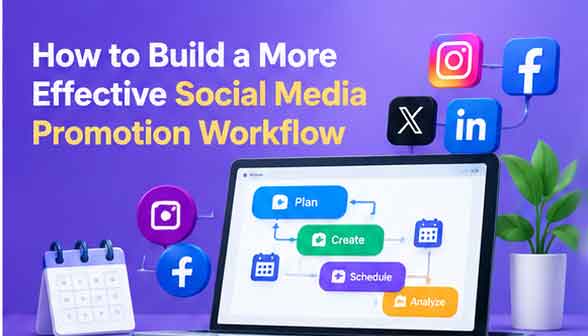
A basic workflow might look like this:
- Create and publish content.
- Monitor early performance.
- Identify content with promising engagement.
- Decide whether additional promotion is appropriate.
- Track results.
- Compare performance with the original objective.
- Adjust future campaigns based on the findings.
This process helps marketers distinguish between content that simply receives attention and content that contributes to meaningful business objectives.
When evaluating different promotional solutions, businesses can also review factors such as service reliability, available features, platform compatibility, delivery methods, reporting, and campaign flexibility. A practical overview of these considerations can be found in this guide to SMM panel services.
Focus on Audience Relevance
Visibility alone does not guarantee meaningful results.
A post can receive a large number of impressions while generating very little interest from the intended audience. For this reason, audience relevance should remain a central part of campaign planning.
Businesses should consider questions such as:
- Who is the content designed for?
- What problem does it address?
- Why would someone interact with it?
- What type of language does the audience respond to?
- Which platforms does the target audience use most?
- What action should users take after seeing the content?
Understanding these questions can improve both content quality and promotional efficiency.
The goal is not simply to reach the largest possible audience. It is to reach people who are more likely to find the content useful or relevant.
Monitor More Than Follower Counts
Follower growth is one of the most visible social media metrics, but it should not be analyzed in isolation.
A healthy campaign can involve multiple indicators, including engagement rate, video completion, profile visits, website traffic, shares, saves, comments, and conversions.
For example, an account may gain thousands of followers but receive very little interaction from them. Another account may have a smaller audience but generate strong engagement and consistent customer interest.
This is why businesses should connect social media metrics with their broader objectives.
Tracking performance over time can also reveal patterns. If certain topics consistently generate more shares, for example, that information can influence future content planning.
Use Data to Improve Future Campaigns
Analytics should not be treated as a final report that is reviewed only after a campaign has ended. It can become part of the ongoing decision-making process.
Marketers can compare different variables such as:
- Content formats
- Posting times
- Topics
- Captions
- Calls to action
- Video lengths
- Audience segments
- Promotional approaches
Small changes can sometimes produce meaningful differences in performance.
Instead of making assumptions about what audiences prefer, businesses can use their own historical data to identify patterns. This creates a more informed approach to social media planning.
Avoid Overdependence on a Single Tactic
Social media performance is influenced by many factors, including content quality, audience relevance, consistency, timing, platform dynamics, and promotional strategy.
Relying entirely on one tactic can therefore create an unstable marketing system.
A stronger workflow combines several activities. High-quality content can attract attention, community interaction can strengthen relationships, and carefully planned promotion can help selected content reach additional audiences.
Each element serves a different purpose.
The objective should be to create a system where these activities support one another rather than expecting one method to produce every desired outcome.
Maintain a Realistic Publishing Schedule
One of the biggest challenges for smaller teams is maintaining consistency without exhausting available resources.
A realistic schedule is usually more useful than an ambitious schedule that cannot be maintained.
Businesses can simplify production by batching similar tasks. For example, several videos can be recorded during one session, while captions and graphics can be prepared in advance.
Content can then be scheduled according to the campaign calendar.
This approach creates a more predictable workflow and gives marketers additional time to analyze performance and respond to their audience.
Keep Testing and Refining
There is no universal social media strategy that works identically for every business.
Audience expectations change, platforms introduce new features, and content trends evolve. As a result, effective social media promotion requires continuous testing.
Testing does not necessarily mean changing everything at once. In fact, changing too many variables simultaneously can make it difficult to understand what caused a particular result.
A better approach is to test individual elements when possible. A business might compare two different hooks, content formats, or calls to action and then observe the results.
Over time, these small experiments can help create a more refined strategy.
Build a Long-Term Promotion Strategy
Effective social media promotion should be viewed as an ongoing process rather than a collection of isolated campaigns.
A structured workflow makes it easier to plan content, evaluate results, identify opportunities, and allocate resources. It also helps businesses avoid making decisions based solely on short-term fluctuations.
The strongest workflows usually combine clear objectives, consistent content, audience understanding, platform-specific execution, performance analysis, and carefully selected promotional activities.
By organizing these elements into a repeatable process, brands can create a more sustainable approach to social media marketing. Instead of constantly reacting to changes, they can use data and experience to make each campaign more deliberate and efficient.